

Skip to content
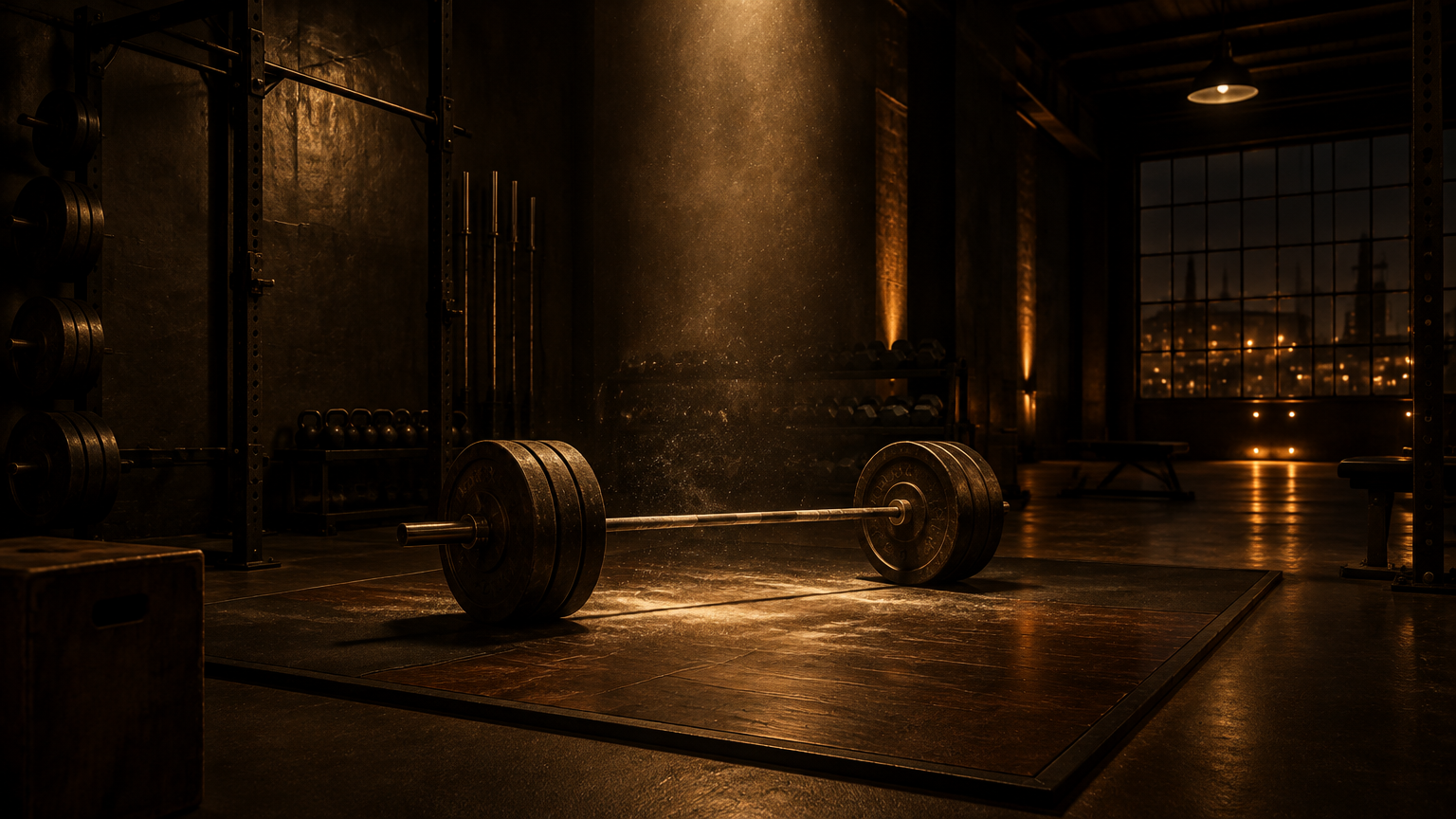
A loaded barbell on a dark private training floor lit by a single warm light
The Standard

Assessment isthe first lift.

The standard is carried in the dark, not the spotlight

No templates. No assumptions. We measure the person in front of us, then build the architecture that meets them exactly where they stand.

Mind · Body · ToleranceMeasured, not managed
  • The Three Standards

    Mind. Body. Tolerance. All three measured. None assumed.

  • The Floor

    Built for work. Designed for answers. Not for spectacle.

  • Programs

    Not templates. Training architecture based on data.

  • Research

    We test. We question. We refine.

  • No One Sits Unanswered

    Questions are data. Silence is not an option. You will be met.

01 · The Standard

Mind. Body. Tolerance.The standard, explained.

Fitness is not a look, a season, or a scoreboard. It is the ability to complete a task to standard, safely, and remain ready for the next one. Everything at MBT is built on that sentence.

“Fitness is the ability to complete a task to standard, safely, and remain ready for the next one.”
Nathanael Morrison · Military Fitness
  1. 01

    Mind

    Clarity when exhaustion screams quit.

    Load exposes the mind first. Under fatigue we coach attention, breathing, and decision-making so the plan survives contact with discomfort. Composure is not a personality trait. It is a skill, and it is trained like one.

  2. 02

    Body

    Strength and stamina that work in the real world.

    Not gym strength. Carry strength. Rucks, stairs, groceries, a body that still moves at 0400. A soldier is not an athlete, and neither is the everyday warrior. Athletes peak for a scoreboard; you have to sustain through the unpredictable.

  3. 03

    Tolerance

    The quiet grit that answers pain with “not today.”

    Tolerance is the capacity to absorb stress without breaking. It is built through progressive exposure, honest recovery, and a plan that respects the edge instead of romanticising the wreckage. Nobody here is asked to be tougher than their recovery.

The test

A 12-mile ruck under three hours isn’t fit if you collapse at the finish. It’s fit when you walk off upright, breathing steady, and can still handle a crisis at 0400, whether that’s a night operation or a toddler’s 3 a.m. meltdown.

02 · The Story

Raymond Santiago

Founder & Head Coach

Best Ranger
1st place, 2013
Best Warrior
2nd overall, U.S. Army
Coaching
15 years, soldiers to civilians
A lone rucksack-clad figure walking a mountain ridge at first light
The standard is carried in the dark, not the spotlight

Santiago never chased fame. He chased survival.

His compass was set by two men: LTG David E. Grange, the visionary who built the Best Ranger Competition, and COL Frank Pocket, the leader who proved grit outruns talent. Their lesson: elite isn’t a rank. It’s a standard you carry when the lights go out.

That standard took root in 2009, when he began reverse-engineering performance for Best Ranger. The record that followed is not a highlight reel. It is a curriculum.

  1. 2009Begins reverse-engineering performance for Best Ranger.
  2. 2010DNF. Failure becomes his professor.
  3. 20113rd place.
  4. 20122nd place.
  5. 20131st place.

He then competed as a Best Warrior competitor, winning multiple events and taking 2nd place overall in the U.S. Army Best Warrior Competition.

Santiago doesn’t hoard knowledge. He multiplies it.

Best Medic
2nd and 3rd place
Best Sapper
4th place
Best Ranger
Multiple winning teams. One took it twice; one soldier became the only person in history to win it three times.
Beyond the competition
FBI Academy candidates who earned Top Fitness Recruit. Dozens through Ranger School, SFAS, and Delta Selection.

Yet MBT isn’t just for soldiers. It’s for anyone who refuses to be average: the firefighter pulling 72-hour shifts, the single parent grinding two jobs, the civilian who wants to outrun yesterday’s version of themselves. Stress, load, and chaos don’t care about your job title.

His framework was forged in Nathanael Morrison’s Military Fitness, where fitness means completing the task to standard and staying ready for the next one. For 15 years Santiago has distilled battlefield lessons, podium finishes, and hard-earned scars into a system that works for anyone ready to level up.

Now, through his partnership with Sytos Health, MBT lives inside their app: daily, practical, no-BS training for soldiers, first responders, parents, desk warriors, and weekend grinders alike.

He hates losing more than he enjoys winning.

Winning fades. Losing fuels. That fire powers every workout, every rep, every early morning.

This isn’t a military program. This is human readiness.

Chalked hands gripping a knurled barbell under warm gold light

The floor · private training hall

03 · The Floor

Built for work.Designed for answers.

A quiet room, honest equipment, and a cap on how many people can be inside it. Nothing here is staged for a camera. Everything here is here because it tells us something about the person using it.

  • Calibrated plates and competition bars, logged every session.
  • A private floor capped so no lifter trains unattended.
  • Video review on every heavy set, kept for your file.
Minute assessment
90Minute assessment
Coaching only
1:1Coaching only
Lifters on floor
12Lifters on floor

04 · Free Training

One week.Free to run.

Week one is yours in full: five training days and a weekend. It is pulled from week 10 of Santiago's 2010 Best Ranger train-up, reinforced with the Horsemen template, and every day names its stimulus before the work starts. Every load is prescribed from your assessment. The other eleven weeks, and the four-month bridge that follows them, are coaching.

  • PT

    Physical training block. The run or sprint work that opens the day.

  • FM

    Foot march. Time under a ruck at a walk. Pace, not speed.

  • RR

    Ruck run. Same load, run the ground that allows it.

  • Loads

    Prescribed from your assessment numbers, never picked on the day.

  • Metabolic conditioning

    Short and hard. Breathing is the limiter, not the load.

  • Strength

    Heavy, low reps, full rest. The load is the score.

  • Power

    Fast intent, low reps, long rest. Speed ends the set, not fatigue.

  • Power endurance

    Moderate load, high reps. Hard efforts repeated on a clock.

  • Endurance

    Thirty to ninety minutes of steady aerobic work.

  • Recovery

    Low heart rate, low impact. Blood flow, not training.

Prescribed, not guessed

Every number in this week comes from a test. Deadlift and power clean percentages come from your tested single. Pack weight comes from your bodyweight and your assessment. Push-up, pull-up and sit-up volumes come from your test numbers. If you do not know those numbers, you have not been assessed, and these loads are not yours yet. Do not guess them. Book the assessment, and we build the baseline that makes week one possible, then the eleven weeks that follow it.

Get my numbers first
  • Day 1 · MondayMetabolic conditioning

    Sprints, foot march, push and pull

    Week 10 · peak wave · about 3 hours

    Warm-up

    • Barbell complex, 4 rounds of 6 reps: deadlift, row, hang clean, front squat, push press, back squat, push-up
    • Bar climbs each round: 75, 85, 95, 105 lb
    • No bar down until the push-ups are done

    PT · sprints

    • 7 × 800 m hard, 2 min easy jog between
    • Every repeat within 3 seconds of the first
    • Close with 10 × 100 m strides, walk back

    FM · foot march

    • 80 minutes under load at march pace
    • Sheet mark for this week: 67.5
    • Walk the flats, march the hills, do not run
    • Pack weight prescribed from your assessment

    Strength volume

    • Push-ups 6 × 60
    • Pull-ups 5 × 12
    • Sit-ups 100 inside 20 minutes
    • Chest and triceps: 5 exercises, 5 × 12

    Swim

    • 24 laps easy, nose breathing only
    Standard
    All seven 800s inside a 3 second window, the full foot march at prescribed load, push-up sets unbroken.
    If it breaks
    Four 800s at the same pace. 40 min foot march at half load. Push-ups 4 × 30, pull-ups 4 × 6, swim 12 laps.

  • Day 2 · TuesdayStrength

    Pull strength and terrain

    Week 10 · about 2 hours

    Warm-up

    • 12-minute kettlebell complex, 1 minute each: swing, figure 8, clean and press, slasher to halo, snatch, lunge
    • Bell does not touch the floor for the full 12 minutes

    PT · easy run

    • 20 min run, conversational pace. Nose breathing only

    Strength

    • Deadlift: build to a heavy single, then 5 × 3 at 85% of that single
    • Rest 3 minutes between working sets
    • Back and biceps: 5 exercises, 5 × 15

    Terrain

    • 45 min with map, compass and load. Walk the route you intend to race
    Standard
    Every deadlift leaves the floor with a flat back. Last pull-up set matches the first.
    If it breaks
    Deadlift 5 × 3 at 70% of the single. Bodyweight rows in place of pull-ups. Two terrain loops instead of three.
  • Day 3 · WednesdayEndurance

    Run, foot march, shoulders and legs

    Week 10 · about 3 hours

    Warm-up

    • 5 rounds: 10 wall balls, 20 sit-ups, band shoulder dislocates

    PT · steady run

    • 45 min steady run. Nose breathing only, or heart rate under 150
    • Last 10 minutes at a pace you could hold for an hour

    FM · foot march

    • 80 minutes under load at march pace
    • Sheet mark for this week: 67.5
    • Same pack weight as Monday

    Strength

    • Shoulders and legs: 5 exercises, 5 × 12
    • Press, lateral raise, split squat, leg curl, calf raise

    Volume

    • Push-ups 6 × 60, pull-ups 5 × 12, 100 sit-ups inside 20 minutes
    • 24 laps easy
    Standard
    Run splits even to within 30 seconds per 10 minutes, foot march completed at prescribed load with no running.
    If it breaks
    25 min run. 40 min foot march at half load. Three sets of 10 on shoulders and legs. 12 laps.
  • Day 4 · ThursdayPower

    Power, total body, load carriage

    Week 10 · about 2 hours

    Warm-up

    • 3 rounds: 5 power cleans at 60%, 10 med ball slams, 10 jumping lunges, 5 inchworms

    PT · easy run

    • 20 min run, conversational pace

    Power

    • Power clean 6 × 3 at 75 to 80% of your tested single, 90 seconds rest
    • Every rep fast. End the set the moment speed drops

    Strength

    • Total body, 4 sets each: chest, triceps, back, biceps
    • Dumbbell, machine or cable, 8 to 12 reps

    Job specific

    • 1 mile with your prescribed pack weight
    • 3 rounds: 50 lunges, 50 dips, 10 pull-ups, pack stays on
    • 1 mile cool-down, no pack
    Standard
    Bar speed holds across all six power sets. Pack stays on for every round of the loaded block.
    If it breaks
    Power clean 6 × 3 at 60%. Half the prescribed pack weight, half the reps, same route.
  • Day 5 · FridayPower endurance

    Ruck run and posterior chain

    Week 10 · about 3 hours

    Warm-up

    • 5 rounds: 20 kettlebell swings at 44 lb, 7 jumping lunges, 10 push-ups

    PT · negative split run

    • 45 min run. Second half faster than the first

    RR · ruck run

    • 80 minutes under load, running the ground that allows it
    • Sheet mark for this week: 67.5
    • Same prescribed pack weight as the foot marches

    Strength

    • Smith machine: 5 sets per station, 8 to 10 reps, run as supersets
    • Squat, bench, row, overhead press

    Volume

    • Push-ups 6 × 60, pull-ups 5 × 12, 100 sit-ups inside 20 minutes
    • 24 laps easy
    Standard
    Second half of the run is faster than the first, ruck run finishes inside the sheet mark at prescribed load.
    If it breaks
    25 min run at even pace. 40 min ruck at half load. Three sets per station. 12 laps.
  • Day 6 and 7 · WeekendRecovery

    Flush, then stop

    Saturday · 30 to 60 min · Sunday · off

    Saturday

    • Easy row, bike, hike, swim or walk. Heart rate under 65% of max
    • 30 to 60 minutes. Conversation the whole way
    • Nothing loaded, nothing timed, nothing scored

    Sunday

    • Full rest. Sleep is the session
    • The sheets left two days open every week. Use both
    Standard
    You finish the weekend wanting Monday, not dreading it.
    If it breaks
    Sleep under six hours, or a resting heart rate up 10 beats: take the whole weekend off.

After week one

The Horsemen bridge.Four months, two week rotation.

From week two the work moves to the Horsemen template. Four months, each with one dominant stimulus, rotated on a two week cycle, with sessions pulled from the Horsemen library and matched to the month and the week. The structure is below so you can see how it thinks. The sessions, the loads and the progressions are written for the person in front of me, and they are not published here.

  • Month 1Strength
    Rotation
    Every 14 days: 4 strength, 2 recovery, 2 job specific, 2 power endurance
    Sample day
    Build to a heavy single press, then 6 × 3 at 75 to 80% with walking lunges and a rope climb

    Heavy, low reps, full rest. Strength is the currency of every month after this one.

  • Month 2Power endurance
    Rotation
    Every 14 days: 4 power endurance, 2 strength maintenance, 2 job specific, 1 endurance of 60 min or more, 1 recovery
    Sample day
    400 m run, get-ups, jumping lunges, laddering down the runs and reps, then a 60 min endurance piece

    Load stays moderate, density rises. The clock becomes the coach.

  • Month 3Job specific
    Rotation
    Every 14 days: 6 job specific, 1 strength, 1 power endurance, 2 recovery
    Sample day
    60 min max rounds: deadlift, weighted sit-ups, push press, swings, get-ups

    Loaded carries, terrain and long grinds. Everything points at the test.

  • Month 4Maintenance
    Rotation
    Every 14 days: 4 recovery, 2 circuit, 2 strength, 2 job specific
    Sample day
    30-20-10 deadlift at 125% bodyweight with handstand push-ups, plus two easy aerobic days

    Hold what you built. Cut volume, keep the intensity sharp.

Weeks two through twelve are not free.

Week one proves the work. The other eleven weeks of the train-up, the four month bridge, and the loads written against your own numbers come with the program. If you want them, purchase the program, or reach out first and we will assess you and get you ready for the weights the sheets actually call for.

Soreness is not a score. Stop if the pain is sharp rather than dull, and get it looked at.

Check your entry point

05 · The Assessment

Find yourentry point.

Assessment is not a test you pass. It is the first honest conversation between your body and your plan. Start with four questions, then decide whether you want the full read.

The full assessment · one to one, paid

  • Movement screen and joint positions
  • Two-mile timed effort, paced honestly
  • Load carry and grip standard
  • The 12-mile ruck standard, scheduled not guessed
  • Recovery, sleep, and stress markers
  • A written read and the next block
Request the full assessment

Fee confirmed on enquiry. No card details are taken on this site.

Free self-check

0 / 4

01In the last month, how many weeks did you train at least twice?
02Can you carry 20% of your bodyweight 200 m without setting it down?
03Can you hold a 15-minute mile under load for 12 miles?
04After a hard week, how do you recover?

Answer all four to see where you would start. Nothing is sent anywhere.

06 · Programs

Not templates.Training architecture.

Every program begins with an assessment and ends with a review. Between those two points, the plan is written, measured, and rewritten around one person.

  • 01

    The Assessment

    90 minutes · one to one

    A full movement, capacity, and tolerance audit. You leave with a written read of where you stand and what the next block should hold.

    Enquire
  • 02

    Foundations

    8 weeks · twice weekly

    For the lifter rebuilding trust in their own structure. Positions first, load second, confidence as a by-product of both.

    Enquire
  • 03

    The Standard

    16 weeks · by application

    Complete training architecture: assessment, block planning, weekly review, and direct access between sessions.

    Enquire

Pricing

Pay for the work.Nothing else.

Every option starts with the assessment, because every number on this page is written from a measured baseline. Membership unlocks the specialty programs while you hold it.

  • The Assessment

    $250one time

    The full measured baseline. Nothing is prescribed until the numbers exist.

    • Ninety minutes, in person or virtual
    • Strength, aerobic and movement testing
    • Written baseline and prescribed loads
    • Debrief call on what the numbers mean
    Buy
  • The Program

    $149one time

    The twelve week block, written against your own assessment.

    • All twelve weeks, five training days each
    • Foot march and ruck run progressions
    • Loads prescribed from your numbers
    • Standard and scale for every day
    Buy
  • Membership

    $59per month

    Ongoing access to the specialty programs and every block released while you are a member.

    • Every specialty program unlocked
    • The four month Horsemen bridge
    • New blocks as they are released
    • Cancel any time from the member area
    Subscribe
  • Membership, annual

    Best value

    $590per year

    Twelve months for the price of ten. For the person who is staying.

    • Everything in the monthly membership
    • Two months free against monthly
    • Priority on assessment dates
    • One program of your choice included
    Subscribe
  • One to one, virtual

    $125per session

    A single coached session on video. Technique, programming, or the honest conversation.

    • Sixty minutes, one to one
    • Recorded for you
    • Written notes and next steps
    Buy
  • One to one, in person

    $175per session

    A single coached session on the floor. Hands on the bar, corrections in real time.

    • Ninety minutes on the floor
    • Full technique and load review
    • Written notes and next steps
    Buy

Already paid? Sign in with the same email to see what you own and to manage your membership.

Member area

07 · Research

We test. We question.We refine.

Nothing at MBT is accepted because it is traditional. Methods earn their place by surviving contact with real people and real records.

We test.
Every block opens with a measure and closes with the same measure. Nothing is assumed to have worked because it felt hard.
We question.
Discomfort is information. We separate the ache of adaptation from the warning of accumulation, then act on the difference.
We refine.
Plans change when the person changes. The document follows the body, never the other way around.
Brass body calipers, a measuring tape and a leather notebook on a dark table

Measurement before opinion

08 · Voices

Voices from the floor.Yours could be the first.

Soldiers, first responders, single parents, desk warriors, weekend grinders. The standard doesn’t ask what your job title is, only whether you carried it.

This wall is reserved for the people who did the work. Every word here will be theirs, published with their name or their initials, never written for them.

No one sits unanswered. If MBT changed how you carry load, this is where you say it.

Share your experience

09 · Contact

Stand onthe standard.

Tell us where you are and what you have been carrying. Every enquiry is read and answered by a coach, not a queue.

Sessions
Monday to Friday · 06:00 – 20:00Saturday by appointment

Open the Sytos Health app · Find MBT

The standarddoesn’t discriminate.

Step up